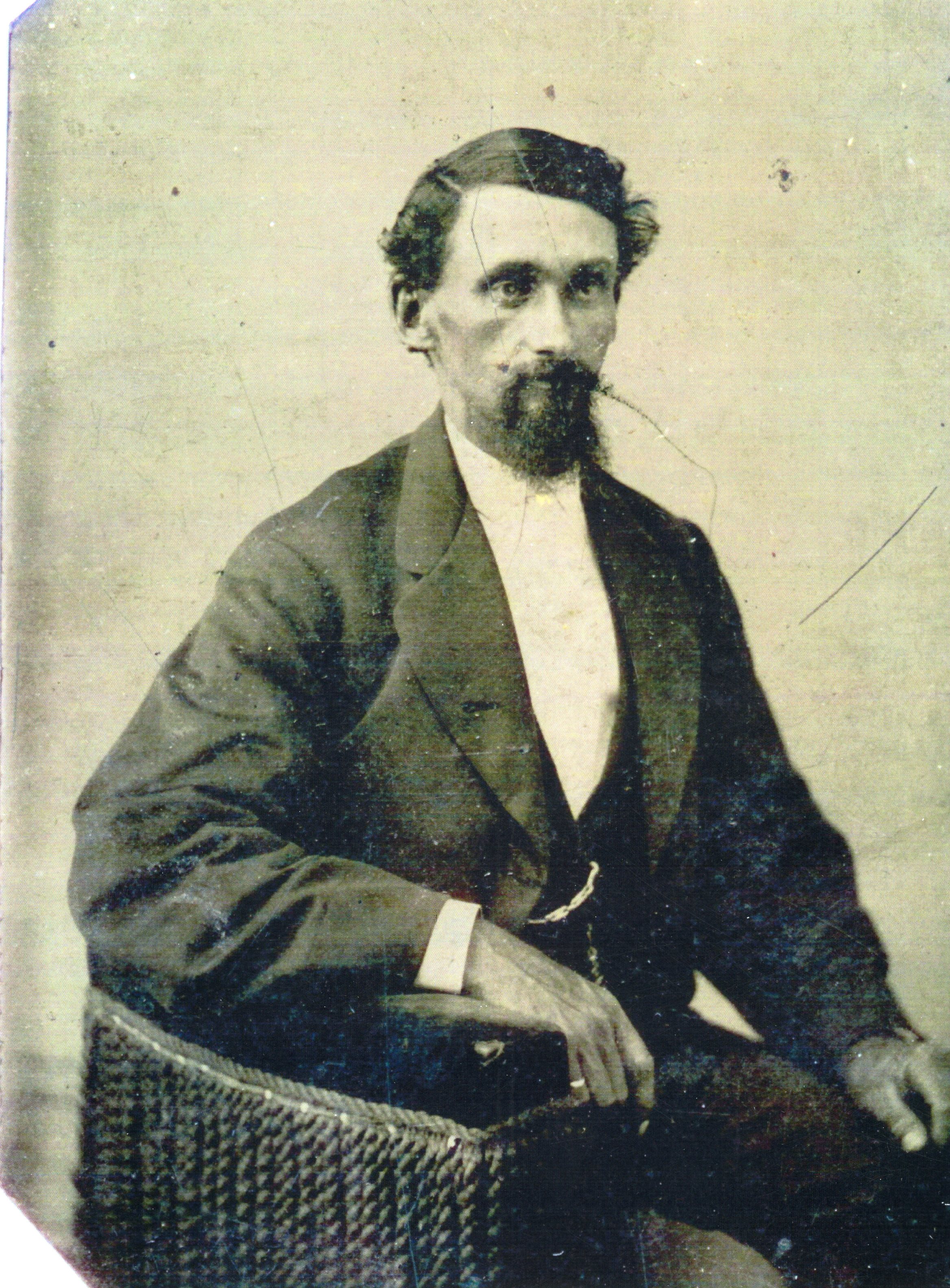
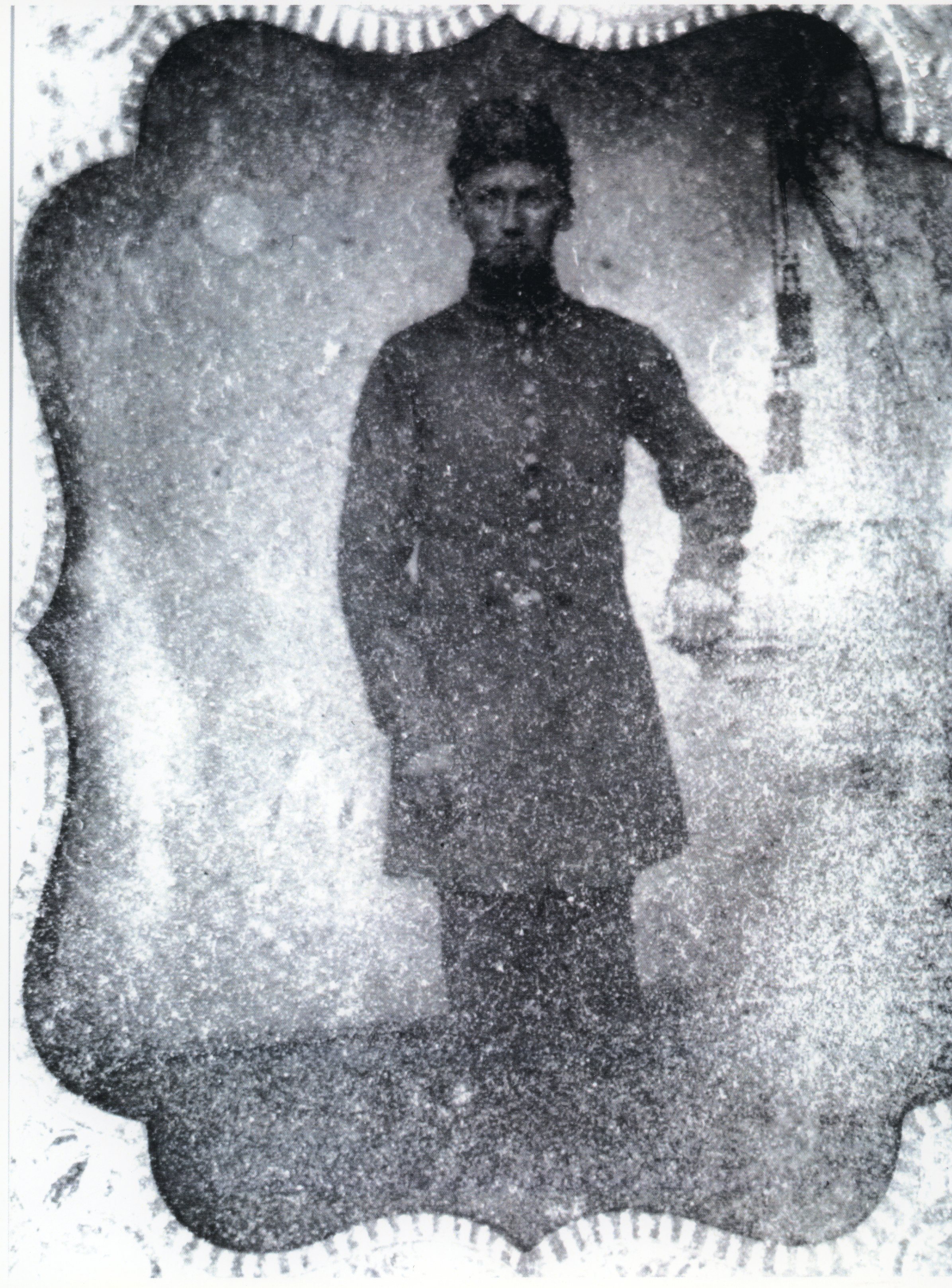
William Jones Memoirs
Nov. 19, 1892
Friend Northrup,
I will try and pen a few facts concerning my Army life. There were eleven of us who enlisted together and were mustered in at Jamestown and joined Co. F, 154 Reg. N.Y.S.
The reason that we were put in Co. F was that the company’s made up from this county were all full.
My experience as a soldier while with our own men was probably like most all others. I endured the hardships on the march and on duty better than I expected. I can say that we had some hard marches on muddy roads etc. and were out on picket duty in some very bad weather, but we had plenty to eat and to wear.
There was one morning I recollect while on the march to Fredericksburg that our rations were very small. I had one hard tack. Many of the boys did not have any. Some of them had found some wheat and boiled that for breakfast but before night we had plenty. We arrived at Fredericksburg the next day, but too late to take a hand in the fight.
For some weeks we had a very good time until the Burnside “Stuck in the muck,” which was a very sad affair. I will omit saying anything about this for I presume someone else has given you a sketch of it. We went back to near Falmouth and to winter quarters and staid there until we were ordered to start for Chancellorsville. This was a hard march, especially after we crossed Kelley Ford.
The night before we crossed Kelly’s Ford a squad of us were sent over in a canvas boat and of course we expected to meet the Johnnys on the other side. My experience was kind of funny — courage and fear fighting within me. Courage came out ahead and I went as far or farther than any of them, but I was glad to get back to the other side of the river. We crossed the next day. The march to Chancellorsville was a hard one and the boys threw away their overcoats and
almost all of their surplus clothing. We marched that night until midnight. In the morning we found out that we were near Chancellorsville.
I will not attempt to describe the battle which commenced in the evening. It was my first experience under fire and the first time to stand up and be shot at. (How would some of our Pension Growlers like to do it.)
The first shot I fired the tube went out of my gun and rendered it useless. I turned around and hollered for a gun. Lieut. Col. Loomis was back of me swinging his sword and with an oath said there would be guns enough very soon. And soon I saw some of the boys hit and killed.
At this time we were ordered to retreat and we made for the woods back of us. On this run I lost my knapsack and my blankets, both woolen and rubber, and my dog tent. This was a sad time. The Rebs drove us through the woods. The rattle of musketry and the boom of cannon was terrible for this as my first experience.
I found a gun and picked up a piece of tent out of the mud and that was all I had to cover me that night. Sad night!
Sunday morning dawned and the battle commenced. We were marched towards the river and put up a temporary breastworks. I, with some others led by the brave Jack Mitchell went into the woods to reconnoiter. I did not like the job but I made out to scrape up courage enough to go. I did not like to be called a coward.
The battle raged fearfully most of the forenoon. Oh what terrible noise the volleys of musketry made! And the boom of the cannon was awful, but that was but a sort of introduction.
Monday night we had a terrible rain storm. We had nothing to shelter us and I took a bad cold. The next day we were marched back across the river and back to Falmouth where I laid sick in my tent for several days. They wanted to send me to the hospital but through the kindness of our surgeon I was permitted to stay in camp. Nothing special occurred until we started for Gettysburg. There are a number of incidents I would like to refer to on this march but perhaps some one has written you all the particulars so I will fly over to Gettysburg.
We arrived there about 2 p.m. July 1st 1863. We could see some of our men fighting on the other side of the town for we laid near the cemetery. We were
ordered to see to our guns and some time not far from 4 p.m. we had orders to fall in and march down through the village. When we were going down the Rebs shelled us and the shells came bounding through our ranks. We were turned into a brick yard and stopped. There was a board fence in front of us and a high board fence back of us and the Johnnys were coming each side of a little knoll in front of us. I had time to fire seven times. There were a number of our men killed here. I cannot recall their names now. On our right was a regiment and if I remember right it was the 134th N.Y.S. Vol. or the 136th. They were terribly slaughtered and as they ran through a wheat field it seemed as though they were mowed down.
We had orders to retreat but where could we go — high board fence back of us — and the Rebs on both flanks. I started the same way I came in but I did not get out of the yard before I was halted. I turned into the brick kiln shed and loaded my gun and my thought was to make the Reb on the fence stop his noise, but before I got a cap on my gun the Rebs were around me like a swarm of bees — cursing and swearing and telling us Yanks to go to the rear.
One incident took my notice and brought me to realize that I was a prisoner. I saw a Rebel officer take his sword flatways and strike Jack Mitchell across the back. I cannot describe to you my feelings at that moment, but I had no time to think long before I was presented with the small end of a bayonet somewhere back of me and ordered to start for the rear. (Do you think they can call me a “Coffee Cooler.” The man that first applied this sentence to old prisoners ought to stitch hemp.) To the rear I had to go.
One incident happened soon after I was taken prisoner was that I found near the bridge a brand new pocket Bible I picked it up and found it belonged to George Wise of an Ohio Regt. I kept the Bible until last year when I found the owner up in Kansas.
Oh! I am getting a little nervous. Oh! I would to God I could blot out the next seventeen months of my experience. They ask us to forget. How can I? It is impossible and I must say it is hard for me to forgive. When I look over my prison experience and I am inclined to believe like the lamented Garfield — “Forget we can’t; forgive we may, but not until they acknowledge that they were wrong. Yes and forever wrong.”
I will stop here today and will send you more soon — if there is any questions you wish to ask I will try and answer them, My diary has dates and incidents. I don’t know how much you would like of my prison life.
(*in margin) I wish I could see you. I am unable to come there now or I would come and spend a day with you.
I will try and write a few more lines although I don’t feel very well.
I will say right here that I had not made any calculation on being taken prisoner. I had thought lots of times that I might be killed or wounded and to find myself a prisoner was really a surprise to me. I soon realized that I had to obey the commands of my captors. I was permitted to help some of the wounded to the Field Hospital of the Rebs, and among others was Lieut. George Winters. After a while I was ordered to where the other prisoners were. In going I met a squad of Reb officers. One of them spoke to me and said “You Yanks stick to your own knapsacks well don’t you.” “Yes sir,” I said. “How many Yanks are there over there?” “You will find enough of them sir,” I said, and he smiled. I learned that the man was none other than General Lee himself.
The next morning we were moved further to the rear of their army. They offered us Parole which a great many accepted but the boys of our Regiment looked at it as a disgrace, so we all refused to accept. I must say I repented thousands of times for not accepting it.
The second day of the fight we could hear them at it. Sometimes we thought the Rebs were getting the best of our folks, then again it would sound the other way. The Rebs claimed they had driven our men from the heights.
Some of the boys were getting quite hungry but I had a good supply of hard tack when taken. On the third day they gave us a pint of flour apiece. The fighting that afternoon was terrible. They sent the paroled prisoners off to our lines. I sent a letter home with one of them. I found in my diary this sentence from the Holy Scripture. Oh Lord! Righteousness belongeth unto thee, but unto the confusion of faces as at this day. David 9th chapter, part of 7th verse.
I will say right here that I have in my diary a verse or part of a verse setting out my feelings on that day until I got too weak to read and write.
On the 4th day we were march further to the rear, about 2 miles. I begun to realize that being a prisoner was not a funny thing. In the afternoon they started us off again. We could not learn much in regard to the fight from the Rebs but we could see from their looks that they were whipped. They took us about 7 or 8 miles and stopped for the night. The roads were very muddy. They gave us a cup full of flour. It rained very hard all night. They started us early the 5th day. We stopped at Fairfield to let their artillery go by. We could see very plainly that they were retreating. This made us feel glad. Started on again. We could hear our men shelling them in the rear and the Rebs admitted that our men had captured some of their wagon trains. I will say right here that it has always been a mystery to me why our army did not follow the Rebs and capture them before they crossed the river.
Today I had a glance at the following Reb generals: Lee Longstreet Ewell, Pickett and some others.
They marched us until midnight and it was a terrible dark night. I have felt sorry many times that I did not try and get away when marching up that mountain. They halted us on top of the mountain. We were tired and wet. There were 3 of us together. We laid on rubber blankets down on the muck. We laid there and talked and laid our plans to get away during the night but we did not wake up until after daylight. You may believe we were very much taken back. We had slept as sound and comfortable as if we were in the best feather bed. When we got up we could see in the mud where we laid as if three hogs had been there.
This was a foggy morning and we found we were near a large house which was used as a hotel on top of Mount Rea. We cooked some flour to eat and they started us down the mountain. About half past ten a.m. as we were going down we could see where Kilpatrick had been obstructing the Rebs on their retreat. They stopped us at the bottom of the mountain and gave us a cup full of flour and meat to part of us. Then they started us again and marched us all night. July 7th we went through Haggerstown. We did not have time to eat breakfast. Some of the women gave bread and butter to some of us, but the Rebs hurried us along and did not stop until we were within two miles of the river. We staid here all night and it was a rainy night too.
July 8 they took the officers across but could not take us. All the facilities they had was a flat boat run on a rope. The water was so high they had to use it.
July 9th started off about two o’clock; stopped at Williamsport. A good old woman gave me some flour and a little salt. We were marched back again but the water was too high they could not ferry us across. We were glad because we were in hopes our army would recapture us. — but no — the 10th we were ferried and marched through Martinsburg. There were many loyal women here and offered water and bread to us but the Reb officers prevented them and forbid them. I think we traveled 15 miles that day and stopped on a very rocky piece of ground for the night.
We were promised some cooked rations but did not receive any. July 11th Pretty hungry lot of men. We were started off and came near Bunker Hill. There we drew some bread for rations, about ½ lb. for each man. There I had to throw away my knapsack. They started us off again about 6 p.m. and marched us until 10 p.m. We were near Manchester. We turned into a lot and camped for the night.
July 12th Foggy morning but very warm. My boots began to give out. They started us again about 11 a.m. We went through Winchester about 1 ½ miles to a big stone mill and they turned us to the right and we camped on a flat piece of ground. They promised us some rations and we got some flour and beef and a very little salt. It was amusing to see the different ways we cooked our flour — some boiled it and some made dough and in southern style threw a chunk into the hot ashes. Some took flat stones and baked on that and some wound the dough on a stick of wood and then baked it on the coals. I can assure you of one thing there wasn’t any wasted for we were beginning to realize what real hunger was. It set in and rained hard in the night.
Morning of the 13th was foggy. They started us off on the Pike. It rained hard. We came to Newtown and stopped a little while. Here we were obliged to go out of the way about 2 miles and wade through 2 ½ ft. of water. We were a wet lot of men for it rained all the time until late in the afternoon. They marched us until almost night. It happened that there were some rail fences just before we stopped for the night and we made a raid on them and strange to say the Rebs did not try and prevent us.
July 14th we cooked some breakfast. It was a very foggy morning. They started us off about 6 a.m. This was a hard day’s march and we were suffering from hunger — 13 day now with only about a quarter enough to eat. Now I say we were hungry — we were suffering from hunger. It began to be painful and no one can understand what I mean only those who have experienced it. To ease the pain we tied ropes and strings around our bodies. Our innards were shrinking and the pain is indescribable. We went through several villages today and we stopped 2 miles beyond Edinsburg. Here we staid all night.
They started us off at 6 a.m. on the morning of the 15th. We went about 4 miles and stopped and drew some rations. 3 pts of flour and ½ lb of bacon and ¼ lb of beef. They started us off again at 2 p.m. We went through several places and finally stopped for the night.
July 16th Fog and lowery morning. We had to start at half past three a.m. We went beyond Harrisonburg and camped for the night. They gave us three hard tacks and small piece of bacon apiece. Rained during the night and oh! What a muddy camp!
July 17th Cold and wet. Started off about 7 a.m. They marched us about 16 miles today and I was tired and sick. At this place I sold my oil cloth blanket for five dollars in Confederate money. I was lucky in doing it because the next day they took them away from everyone that had them. I bought 2 dollars worth of flour.
July 18th started us at 7 a.m. took us through Staunton and stopped about two miles beyond. The first searching was done there. They took all revolvers and rubber blankets and tents away from us. Villains! They gave us about one pint of flour and a small piece of bacon.
Morning of the 19th was very pleasant. We found out that they were going to ship us from here to Richmond by rail and we did not object. A squad went off today. We drew some rations one pint of flour and a small piece of bacon.
July the 20th. A squad of 700 went off today. They gave us about a pint of flour today again and a little beef.
July 21st I got up early and tried to get off today but failed. I bought two small loaves of bread, paid one dollar of Confederate money for them and I bought 1 quart of black berries for 25 cents. I drew a pint of flour and ¼ lb of bacon.
July 22nd Cool and cloudy morning. We were marched down to Staunton, but had to go back to camp again. Rations same as yesterday. Sold my (illegible) for $2.25 Confederate money paid 75 cents for a pie. This was a hot day.
July 23 This morning they marched us to Staunton and about 2 p.m. they put us on the car. As we went on they took our canteens away from us and left us on that hot day without anything to drink or anything to hold water. This was brutal meanness pure and simple. I was taken sick commenced to bloat. I made up my mind that I was poisoned and my suffering was terrible. The train was very rickety — we arrived at Richmond about 7 a.m. July 24th. We were taken over to Bell Island — here they took our haversacks from us and some other things, O what a hot place. The sun was pouring down on us and the sand burned out feet while we were waiting to have them take our names.
Well well, here we are in Bell Island. Now I will not trouble you with regular dates, but will give you a sketch of our suffering and how we were treated.
The camp on the island was a square piece of ground with a wide ditch around it and the dirt from the ditch was the wall around the camp. Outside of this wall were the guards who guarded us there. There were some old army tents of different kinds such as the old Sibleys and the A tents as we called them. I was fortunate as I got a shelter in one of these tents with some of the 5th N.Y. Cavalry in which regiment I had a brother in Co. F
July 25th We drew rations this morning, a piece of wheat bread about ¼ lb and a small piece of pork and this was our breakfast. For supper we got about one pint of rice soup, if you could call it soup, and a piece of bread.
Now I may say that our prison life commenced in earnest and we realized it more and more every day. Our rations were as I have mentioned, a small chunk of bread with a little meat or a cup of bean soup which was very thin.
We were organized into one hundreds and the one hundreds into squads. These squads of 10 had a sergeant and he drew the rations and divided them. The way the bread was divided was that a sergeant would cut it in equal parts and then one of the men would face the other way and the sergeant would put his knife on a piece and ask “who takes this.” The man who had his face turned the other way would answer naming someone in the squad. Bones were in great demand. I have
seen many a fight over a soup bone I have seen men go around the camp and pick up bones from the ditches and sit down and gnaw on them as you have seen dogs do. I would have been glad to do the same thing myself but I had no teeth to do it with. Many an hour I have spend in digging with an old Case knife for wild onions.
Perhaps I would find a half dozen and have very small things after spending half a day or more. We realized that we needed vegetables. The scurvy was getting hold of us. Thus the days passed into weeks and weeks into months. They took some of the sick away and saved them. To our lives many were the rumors and speculations in regard to our exchange.
The Rebs said our folks were to blame and they would not agree with them on some points concerning the colored man. How we used pry the questions to newcomers, as there was some brought in quite often.
Thus we whiled away the time in speculations and in talking of loved ones at home and the good things we would have to eat when we got home.
Oh, I shudder now when I think how many did not get home.
Every three or four weeks they would turn us out of camp and count us over. One of these days we had to go without any rations. Next day they served us with plenty of bean soup but it was soured (?) and some of us could not eat it but had to throw it back. I saw one man who had eat too much had to vomit. It was about four feet from where I was laying in my tent. Pretty soon I saw another come and stoop down and pick up the beans the other had vomited. This looked some like starvation. (This section Jones had crossed out.)
And it was the truth. We were starving to death, by the inch if you will allow the expression.
As cold weather began to come on the camp was quite full of prisoners. There was a little accident happened to me which I will relate. Some of my comrades remember it well if they are alive. We had dug some wells to get water. We had to go about ten or twelve feet. We dipped water from these with our old cups using a string. One cold morning I had got up early so as to get some clean water for after so many dipped the water became dirty. I went to the well with my cup and string and dipped and got my cup full of water but to my sorrow the string broke and my cup dropped into the water. Thee happened to be a sort of ladder
that was used in digging the well left in it. I went down on this to get my cup. As I was about to hold of my cup the ladder broke and let me into the water. There was about 2 ½ feet of water. Some of the boys laughed at me but they were good enough to help me out. I tell you it was no laughing matter for me for I thought I would freeze before the sun would come out and dry me. But by noon I was dry again but the joke was a hard one on me.
There was a great many incidents happen and I have many of these rendered in my diary. Turning us out and searching us for money. The guards shot and killed the (illegible) and (illegible) men that tried to get away. The time we had in fighting lice and the scurvy. Some of us were troubled with constipation. I went 12 days without having my bowels moved.
Along in November as the weather grew colder our suffering became greater. Many of us needed more clothing and shoes. About Nov. 1st there was somewhere about 5,300 of us on that island. We heard that Uncle Sam was going to send us some clothing and on the 20th of Nov. I got a pair of shoes and a woolen blanket. About this time they changed our rations gave us cornbread and that half baked most of the time. This change had a bad effect on us. Many were soon troubled with the diarrhea and it proved fatal to many of the boys. I could name many if I thought it would be of use.
The cold weather the bowel trouble and the scurvy and the vermin and the poor rations. It was (illegible) to try and fight against them all. We lived along hoping against hope until Christmas. It was a sad Christmas. And I tell you it was sad as well as amusing to hear us talk about the good things we would have if we were at home. And here now I began to realize that our suffering was telling on us mentally as well as physically.
New prisoners came in had to lay out in the ditch. It was hard to hear them walk all night trying to keep from freezing, kicking their heels together. Many of them had their feet froze and had to have them cut off.
New Year’s came and went. Our suffering was terrible through the month of January and February. On the 16th of February, 1864 they took 400. We were in hopes that it was for exchange. On the 17th my squad was taken out to the city and put in the old buildings called Pemberton Building. We were put into cattle cars in the night and started off.
Where were they taking us to was the question. Next day we learned from the guards that they were taking us to Georgia. Here we were packed like cattle into an old dirty car. I think we stopped at Charlotte North Carolina. Got some corn dodgers for rations. They started from here on the 25 and at Brownsville we had to change cars and guards. These were no better.
Several incidents occurred on this journey. We received no rations today, arrived at Augusta, Ga. Feb. 26 – changed cars and drawed rations here, hard tack and bacon. 27 stopped at Macon. Came to end of our journey about 2 o’clock morning of the 28 Feb., 1864.
Here we are inside the stockade at Andersonville. For rations they gave us one quart of very coarse cornmeal and some sweet potatoes and some fresh meat and very little salt. The weather was fine.
I will not attempt to describe the camp. It has been described by many. We were the second squat that was put in there. There was no shelter of any kind. There was some timber and lots of stumps but these did not last long for we Yanks made use of them.
As for me this time I was quite sick and very weak. I could not eat my rations and I saved all I could for I expected to get better. They gave us one skillet – sort of spider – for each 25 men to cook our meal.
Each day there were from 400 to 800 prisoners came in most every day for some time. We thought this place was in some aspects an improvement on Bell Island. Little did we think these first that it was to be such a Hell On Earth as it is well named.
Our rations grew less – no potatoes after a few days. On the 4th of March there were 8 dead here in the camp. As the weather grew warmer and the number in the camp increased the death toll increased also. The most I counted in one day was 132 and allow me to say it was a sickening sight to see so many skeletons laying there more than half naked. It makes my blood curdle to think of it and to think of how they were loaded on wagons like cord wood and drawed out to their final resting place which was a ditch dug six feet wide and here they were layed side by side and a pine slab layed on top of them.
I have not said anything about the men that guarded us and had charge of us on Bell Island. I cannot complain much of their treatment. There were some exceptions. But here we found to our sorrow that the men had charge of us were brutes – especially Capt. Wirse. He was a brute in human form if ever there was one. Many an incident I recall of his brutality. As I said there was some wood in camp when we first got in there, but it was soon made use of in different ways. Some to make shelter. In burning this wood we got pretty black for pitch pine makes pretty black smoke. Now take look at us say in June 1864. Somewhere near 30,000 (thirty thousand) in this camp of living skeletons. Black, ragged and dirty. Yes, that is not all. Do you see the lice and worms. Do you see their heads matted with lice and parts of their bodies alive and eat with worms. Do you!!! Oh!! Why, I can see them now.
Here where language fails and the skill of man is not equal to the task of describing us as we were about this time — dried up skeletons, nothing but skin and bones. I have been so dried up that you could not pince my skin anywhere on my body more than you could pince the iron on this stove.
I will pass on up to the time they commenced drawing mush — or corn pudding — for rations. This they loaded into wagon boxes and drawed it into camp and dealt it out. About this time my clothing was very much worse for wear. In fact I did not have but little of it to cover my nakedness. Some was through my old comrade Martin Keller of Co. D, 154. I obtained two meal sacks and I went to work and made me a shirt and a pants. They were grand. You bet I was better off than hundreds of my comrades.
My voice failed me so I could not read aloud and sometime in May my eyes failed so I was blind for some days but I regained my sight pretty well. Soon after this I had a sad experience with gravel stone — this night I shall never forget but the stone passed out in the morning and I was greatly relieved. This night I came nearest giving up of any time during my 17 month in prison.
Now we will pass on to the 1st of Sep. Up to now Sep. 3 — 7.755 — had dried — they had taken one or two small squads away and on the 7th of Sept. I was fortunate in getting away. They took us to Savana and put us in a stockade made of boards about 18 or 20 ft high. We remained here until the 24 when we were taken to Millen(?) put inside of stockade similar to Andersonville. Here was plenty
of timber and good water. This gave us some courage, and we had kind men in charge of us. I was troubled with scurvy in my feet and limbs and my gums. The teeth my under jaw were quite loose. We needed vegetables. I gathered some leafs and eat them and I found wild grapes here in abundance and I was permitted to go out with the sick here and traded some with colored people and the guards for sorghum — sour molasses — and some sweet potatoes and gained some and soon I began to lots of jobs. (illegible) Boils on my shoulders and under my arms and on my feet and thank God for them. They took out the bad blood.
I will mention here an incident about the blood hounds they had at Andersonville and I saw some of these work there. But this was the worst job of all. Some of the boys got away in coming from Savana here and the blood hounds were put on their track and the H caught up with them and they had one fellow’s arm most torn off from him. Another had his limbs bitten badly and there were clothes torn to rags.
Well to hasten on about the 16th of Nov. they took some sick to Savanah to be exchanged and on the 19th I was among a squad of one thousand or more that were send to Savana. We had great fears that they were fooling us. On the 2nd We reached Savanah and were put on board of a tug boat. How fraid I was to get left but I got on board and soon the engine commenced puffing and the boat commenced to move and our hearts began to beat fast and faster as we approached one of Uncle Sam’s boats waiting for us out in the bay.
Here we were paroled. Did I ever see a happier day — no never before or since. Here we are on one of God’s boats and bound soon for God’s country as the boys put it. I think we started for Anapolis on the 22nd of Nov. 1864. During the voyage many of the boys died which seemed very sad. Some ate too much and caused their death that way. We had plenty of Uncle Sam’s good coffee and hard tack.
On the 25 our boat pulled to the wharf and there the band played Yankee Doodle, Star Spangled Banner and (illegible). Do you think that there was a dry eye on that boat? No sir. We cried like children and our tears were tears of joy. Yes, joy. No pen can picture or human being can imagine, only those that had the experience. We were unloaded and taken into a building and stripped and washed and got new clothes. Next day we were taken to Camp Parole, Here we got plenty to eat and it was wonderful how soon we recovered.
We were paid our (illegible) pay and furlough of 30 day were given us on the 4th of December. As soon as I could after I got to Annapolis I wrote a letter home. The postmaster recognized my handwriting and started off as soon as he could for my father’s house — about one mile. We can only imagine the joy of my parents and sisters and brothers. And I will say right here, laugh who may laugh, I believe I was saved in answer to the prayer of the loved ones at home, for looking over the whole ground I cannot but say that it is a miracle that I am here and as well as I am today.
I will hurry along now. I arrived home on the 7 of Dec between 11 and 12 at night. I will not attempt to describe the meeting with father and mother and sisters and bro, but thank God I was once more at home.
Stayed a month and a half, went back to Annapolis, from there to Camp distribution in Virginia. From there on boat to Hilton Head in South Carolina. We expected to reach Savannah before Sherman left for the Carolinas but failed. We were sent up Broad River and camp there until April at Blair’s Landing.
We reached Blair’s Landing on March 1st and stayed there until the 9th of April when we were sent to Wilmington North Car. We arrived here on the 12th. While here we heard the news of Lee’s surrender. We started from here on the 16th. We marched from here to Raleigh NC. We arrived at Raleigh about 5 p.m. on the 24th. Here where I found my regt first since at Gettysburg. I found many of the boys missing. Next day we marched about 12 miles to head Johnston off but that same day he accepted Sherman’s terms and The War Was Over.
Tried to (damaged) for home. This was a hard march, but we were coming home. We endured it better on that account. We arrived near Fairfax (illegible) on the 19th of May. Marched through Washington on the 24th — this was the Great Review day. We camped somewhere near Blaidensburg. Were mustered out on the 11th of June. Next day I started for Elmira. Arrived there on the 14th and home for good on the 24th of the same month.
There are many incidents to come to my mind, such as trading with guards and the vaccination on Bell Island and the effect of it and the loss of arms and -----------
Gen Taylor orders (illegible) of Co. G 154 died on B. (illegible)